Crochet Flower Size Guide: 5 Easy Styles & Best Uses
This crochet flower size guide will help you choose the right flower diameter, yarn weight, hook size, and petal style before you start a project. A flower that looks balanced on a hair clip may disappear on a tote bag, while a large layered rose can feel too heavy for a delicate headband. The goal is to match the flower’s scale and structure to the item you want to decorate.
Below you will find five useful crochet flower sizes, the best projects for each one, simple ways to resize a pattern, and practical finishing tips. The measurements are flexible rather than strict: yarn fiber, tension, stitch height, and the number of petal rounds can all change the final result.
Crochet Flower Size Guide: Quick Reference
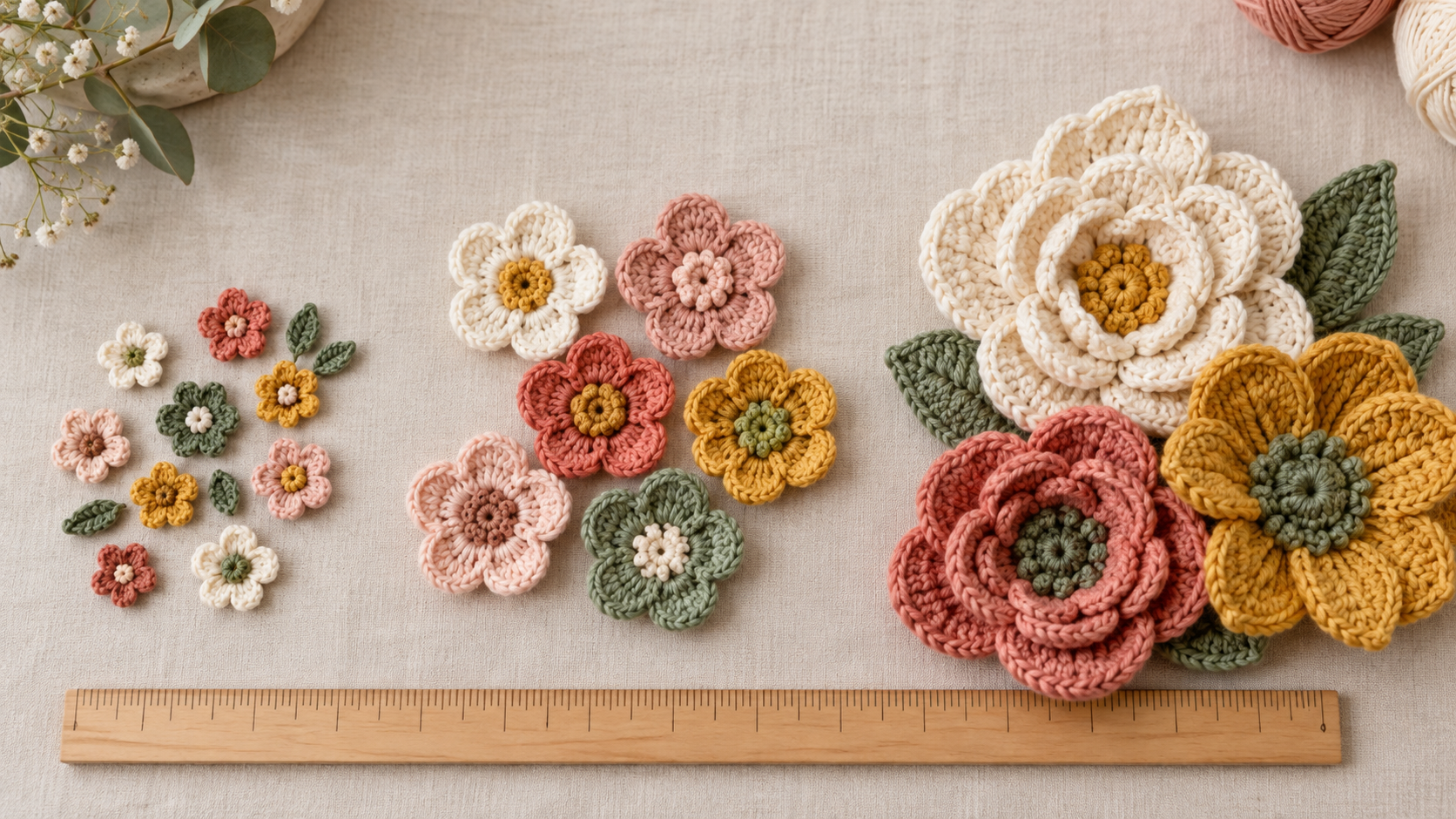
Measure a finished flower across its widest point after blocking. If your petals curl upward, measure the natural shape first, then gently flatten the flower and measure again. This gives you a realistic idea of both its visual size and the space it will occupy when attached.
| Flower size | Approximate diameter | Best uses | Recommended structure |
|---|---|---|---|
| Tiny | 1–2 in / 2.5–5 cm | Hair clips, earrings, cards, baby accessories | One flat petal round |
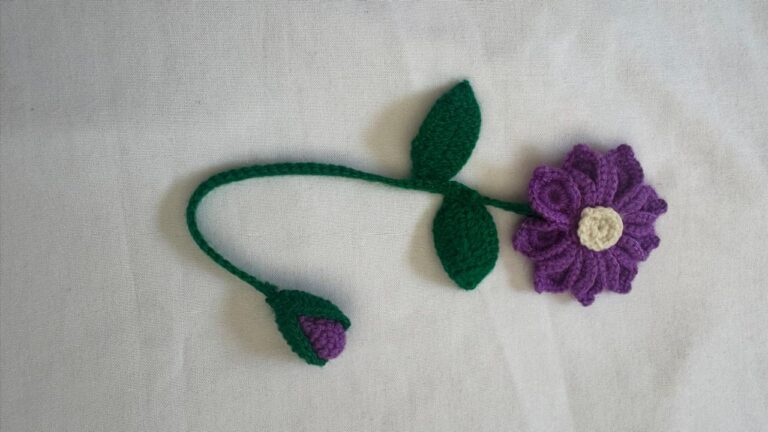
| Small | 2–3 in / 5–7.5 cm | Headbands, gift tags, bookmarks, brooches | One or two light layers |
| Medium | 3–4 in / 7.5–10 cm | Bags, hats, cushions, floral bows | Two layered petal rounds |
| Large | 4–6 in / 10–15 cm | Garlands, wreaths, wall décor, statement bags | Three-dimensional or layered petals |
| Oversized | 6+ in / 15+ cm | Wall art, photo props, dramatic home décor | Firm center with supported outer petals |
Use this crochet flower size guide as a planning tool. Always compare the flower with the actual base before sewing or gluing it in place. If you are decorating something wearable, test its weight and movement as carefully as its diameter.
1. Tiny Crochet Flowers for Delicate Details
Tiny flowers are usually made with crochet thread, fingering yarn, or a smooth sport-weight cotton. A simple five-petal construction works best because too many layers can hide the center and make the motif stiff. Use a smaller hook for neat stitch definition, but avoid tightening your tension so much that the petals curl.
Best for: snap clips, earrings, greeting cards, bookmarks, baby headbands, and small gift decorations. Tiny flowers are also useful for filling small gaps in a larger arrangement.
For a coordinated look, repeat the same tiny flower in two or three related colors. A cream center with blush, dusty rose, and muted coral petals creates variety without making the design feel busy.
2. Small Crochet Flowers for Hair Accessories
Small flowers are one of the most versatile choices in this crochet flower size guide. They are large enough to show petal texture but light enough for comfortable hair accessories. A flat daisy, simple rose, or six-petal blossom works well on clips, headbands, and hair ties.
Choose cotton when you want crisp petals and a clear outline. Soft acrylic is lighter and can be useful for children’s accessories, although very fuzzy yarn may hide small stitch details. When attaching a flower to metal hardware, place a small felt or crocheted circle on the back to cover stitches and create a tidy finish.
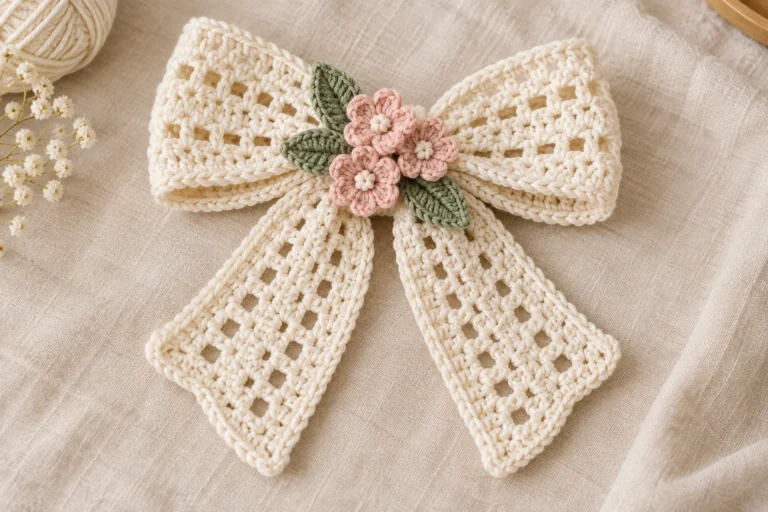
For more composition ideas, see our guide to crochet floral hair bows. It explains how lace, flower placement, and color combinations can work together in one accessory.
3. Medium Crochet Flowers for Bags, Hats, and Bows
A medium flower has enough visual weight to become a focal point. Two petal rounds create depth without becoming bulky, while a textured center adds contrast. Medium flowers look balanced on tote bags, bucket hats, cushion corners, and larger hair bows.
If the base item will be washed regularly, attach the flower with matching yarn and several secure stitches around the center. Sewing only through the center allows the petal tips to lift, while stitching selected outer petals keeps the flower flatter and more stable.
Add one or two leaves to frame a medium flower and create direction. Our crochet leaf patterns guide compares oval, pointed, lace, and textured leaf styles for different projects.
4. Large Layered Flowers for Statement Projects
Large crochet flowers work best when the center is firm and the petal rounds increase gradually. Use taller stitches or longer petal chains in the outer rounds rather than repeating identical petals. This creates a natural progression from the center to the edge.
Worsted yarn makes a large flower quickly, but it also adds weight. DK or sport cotton can give you a wide flower with a lighter, more refined finish. If the outer petals collapse, work the final round with a slightly smaller hook or add a line of surface slip stitches near the petal bases.
Best for: wreaths, wall hangings, garlands, cushion covers, statement bags, and table décor. Before attaching a large flower to fabric, support the back with a felt circle or a firm crocheted base.
5. Oversized Crochet Flowers for Décor
Oversized flowers are designed as decorative objects rather than small embellishments. They may use several petal layers, thicker yarn, or a doubled strand. The most successful designs keep the center proportional: a tiny center surrounded by very wide petals can look unfinished.
Blocking is especially useful for large motifs. Pin each petal into a balanced shape and allow the flower to dry fully before assembly. For a dimensional wall flower, block the layers separately and join them afterward so each round keeps its own outline.
How Yarn Weight Changes Crochet Flower Size
In this crochet flower size guide, yarn weight is the fastest way to resize a flower without rewriting the stitch pattern. The Craft Yarn Council yarn weight system groups yarns by thickness and provides suggested hook and gauge ranges. Those ranges are guidelines, so always make a sample when the finished measurement matters.
- Crochet thread or lace weight: delicate flowers for jewelry, cards, and fine accessories.
- Fingering or sport weight: tiny to medium flowers with clear stitch detail.
- DK weight: versatile flowers for hair accessories, bags, and home projects.
- Worsted weight: medium to large flowers with strong visual impact.
- Bulky yarn: oversized flowers for fast décor projects.
Fiber matters too. Mercerized cotton creates crisp, slightly polished petals. Regular cotton gives structure with a softer appearance. Acrylic is light, washable, and available in many colors. Wool adds warmth and body but may felt or change shape if washed incorrectly.
How Hook Size Changes Shape and Structure
A smaller hook usually produces a firmer, slightly smaller flower. A larger hook creates a softer, more open fabric. Change hook size in small steps because a dramatic change can affect the petal shape and create visible gaps.
As this crochet flower size guide shows, a firm fabric is usually easier to attach when a flower will be sewn to a hair clip or bag. For lace garlands or soft decorative flowers, a more relaxed gauge can create graceful movement. The correct choice depends on the project rather than the pattern alone.
Five Crochet Flower Styles and Their Best Uses
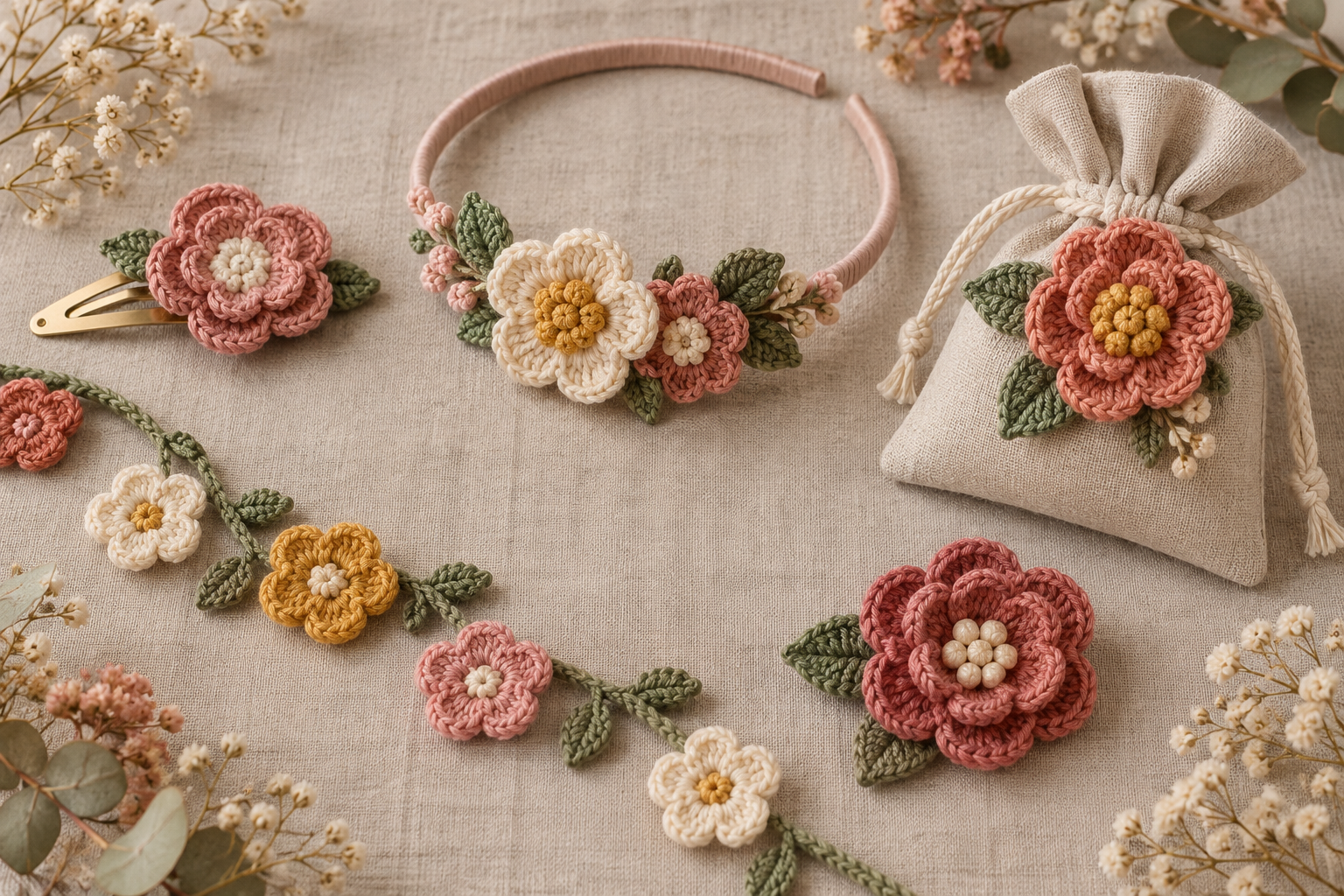
Flat five-petal blossom
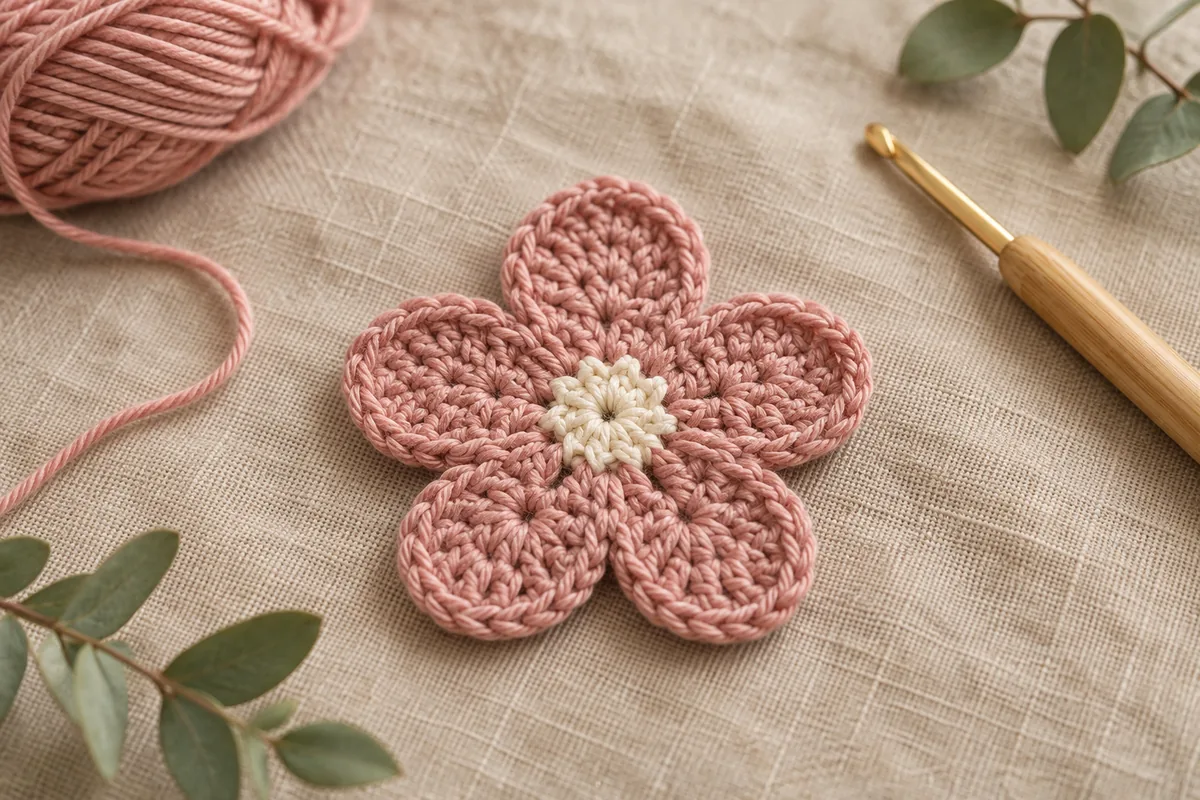
This beginner-friendly style is quick, light, and easy to attach. Use it for tiny flowers, confetti, cards, hair clips, and layered arrangements.
Daisy or sunflower
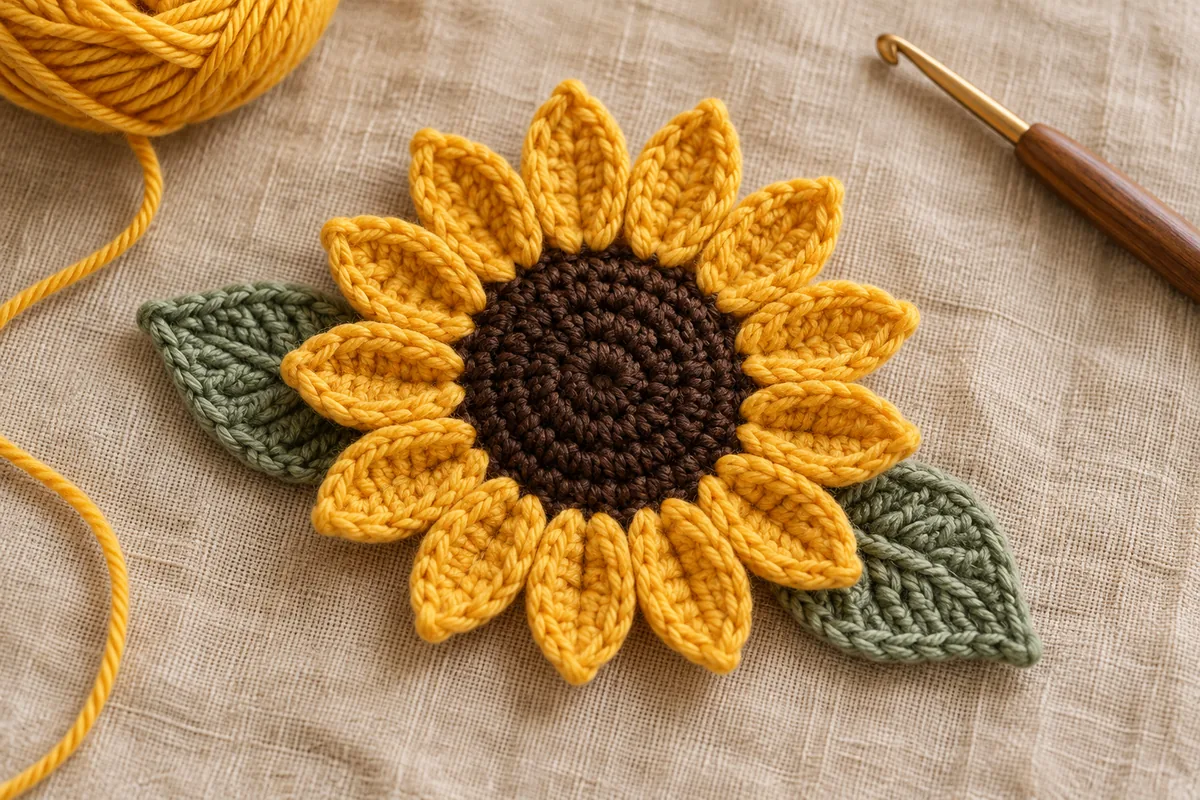
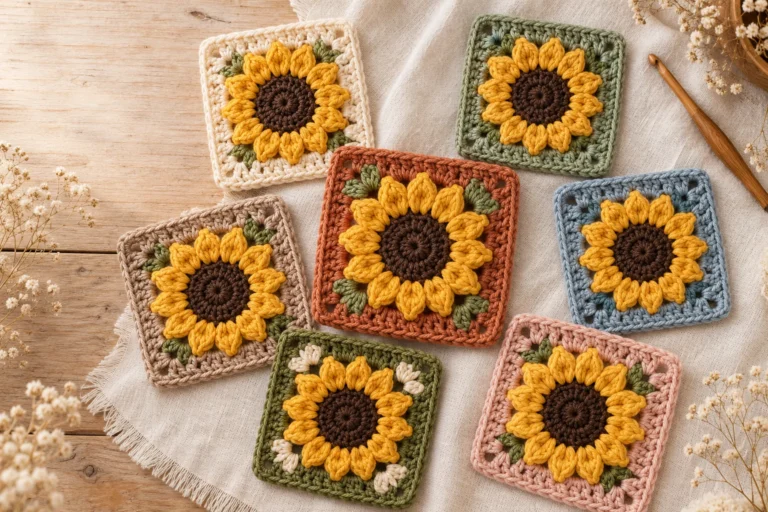
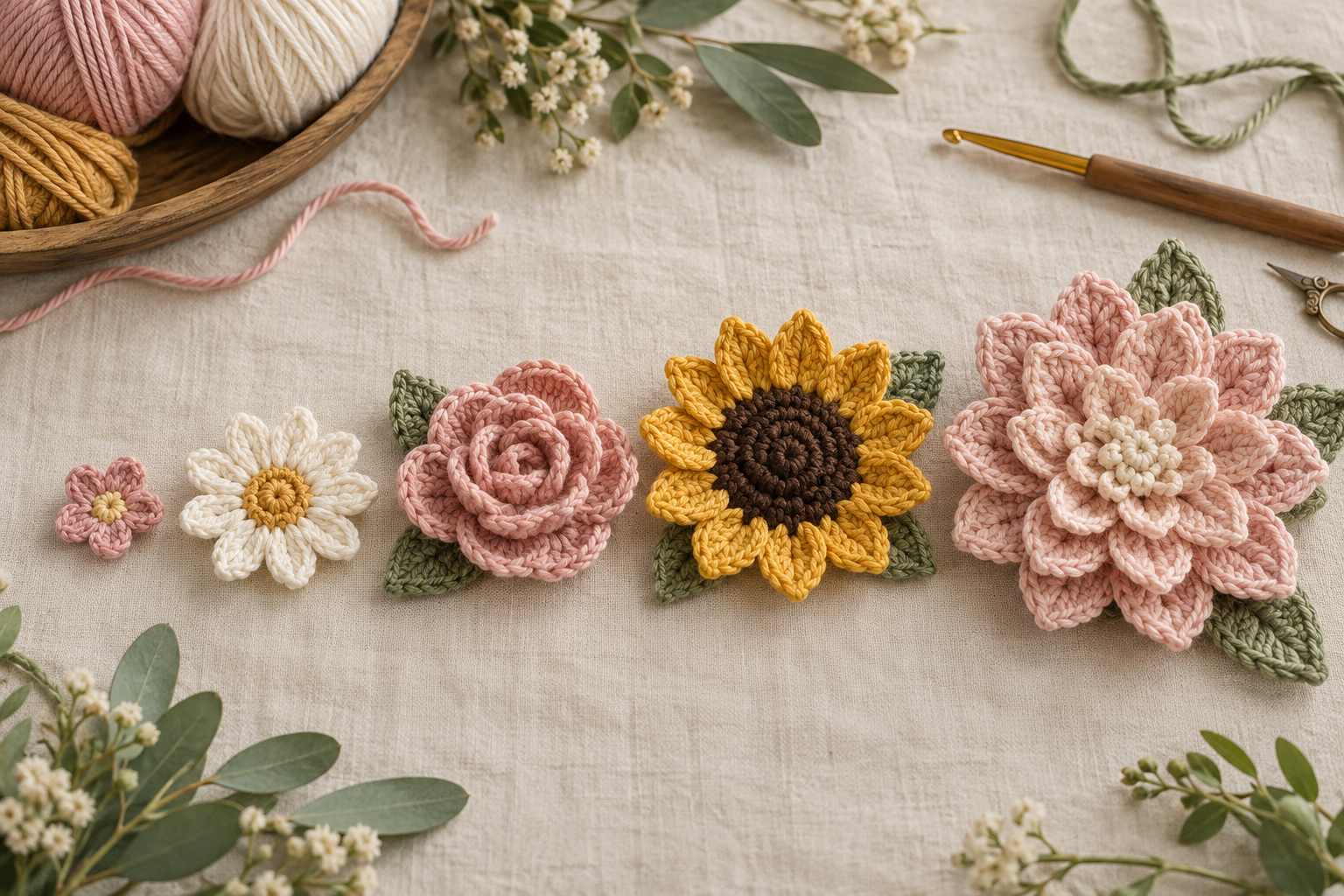
A contrasting center and clear petal ring create a strong graphic shape. Daisies work well on hats, bags, garlands, and granny-square projects. If you enjoy floral squares, our sunflower granny square guide explains how a round flower becomes a balanced square.
Layered rose
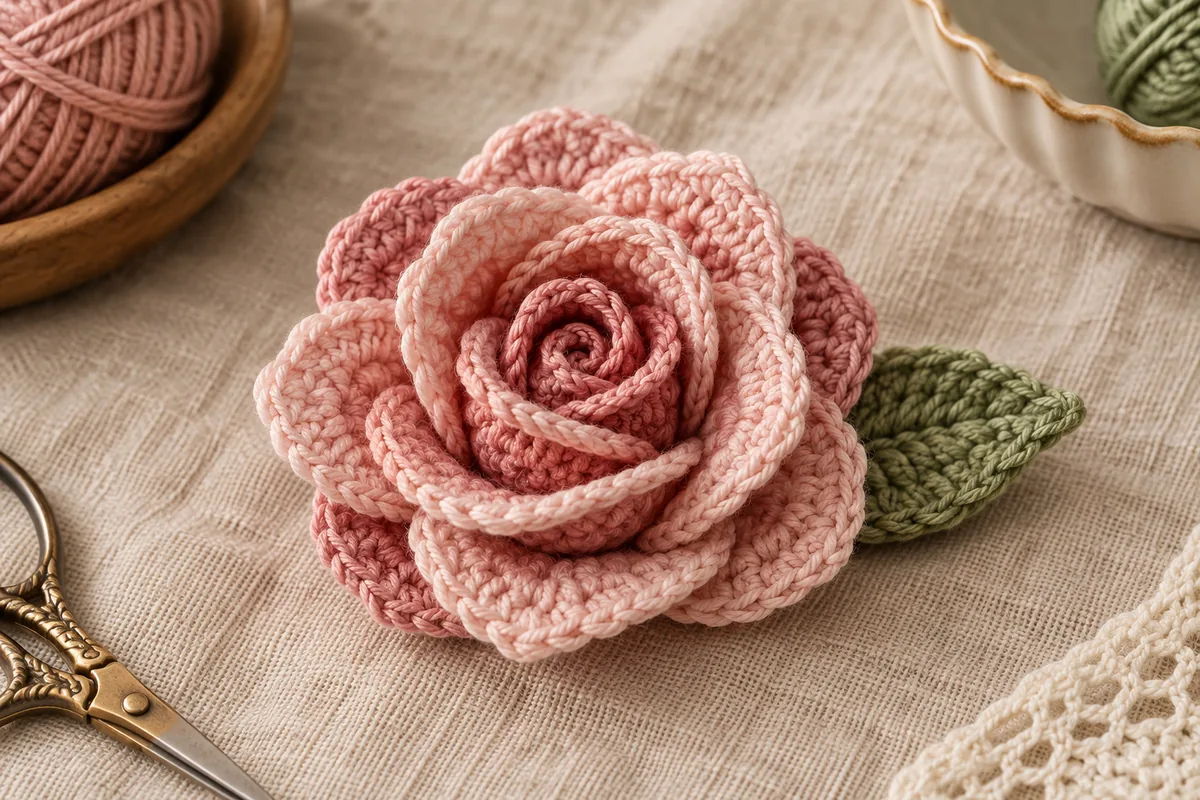
Overlapping petals give a romantic, three-dimensional finish. Roses suit bridal accessories, brooches, gift bags, and statement hair pieces. Keep the back flat enough to sit securely against the base.
Open lace flower
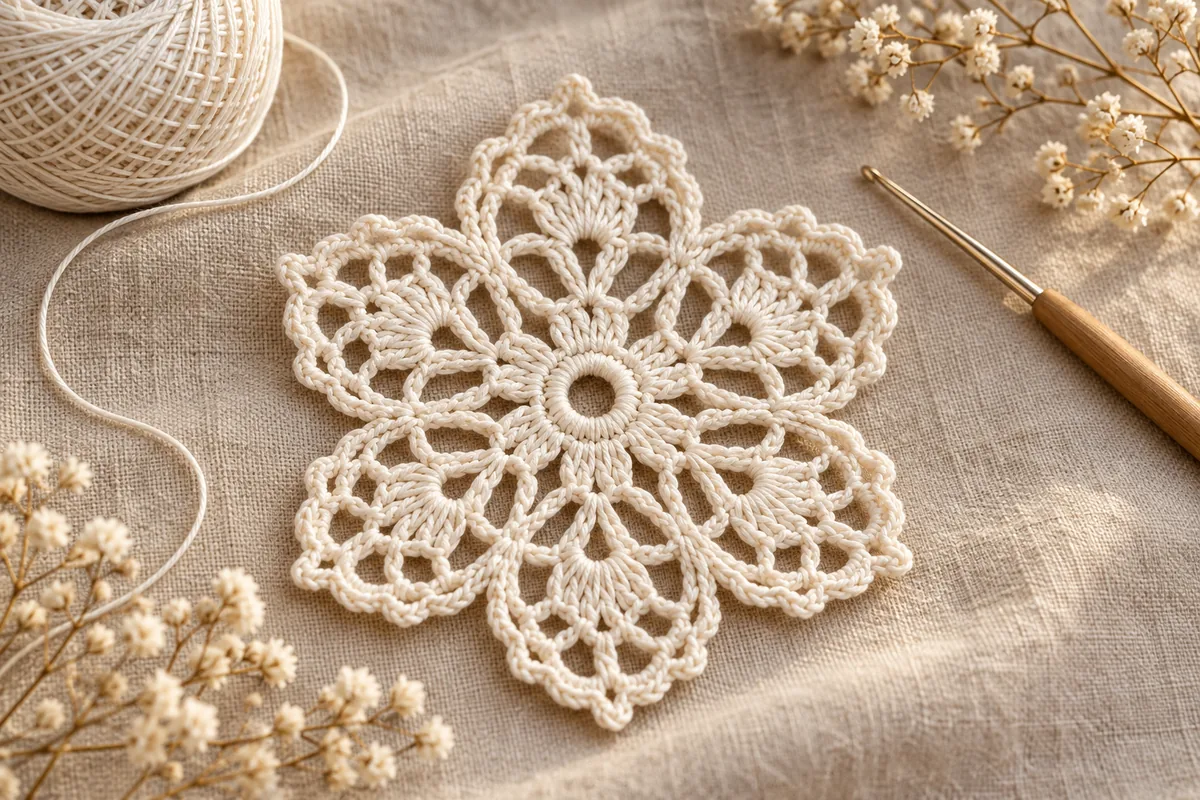
Chain spaces and taller stitches make this flower light and airy. It works well for summer accessories, delicate garlands, and layered bows. Blocking helps the open spaces remain even.
Textured dimensional flower
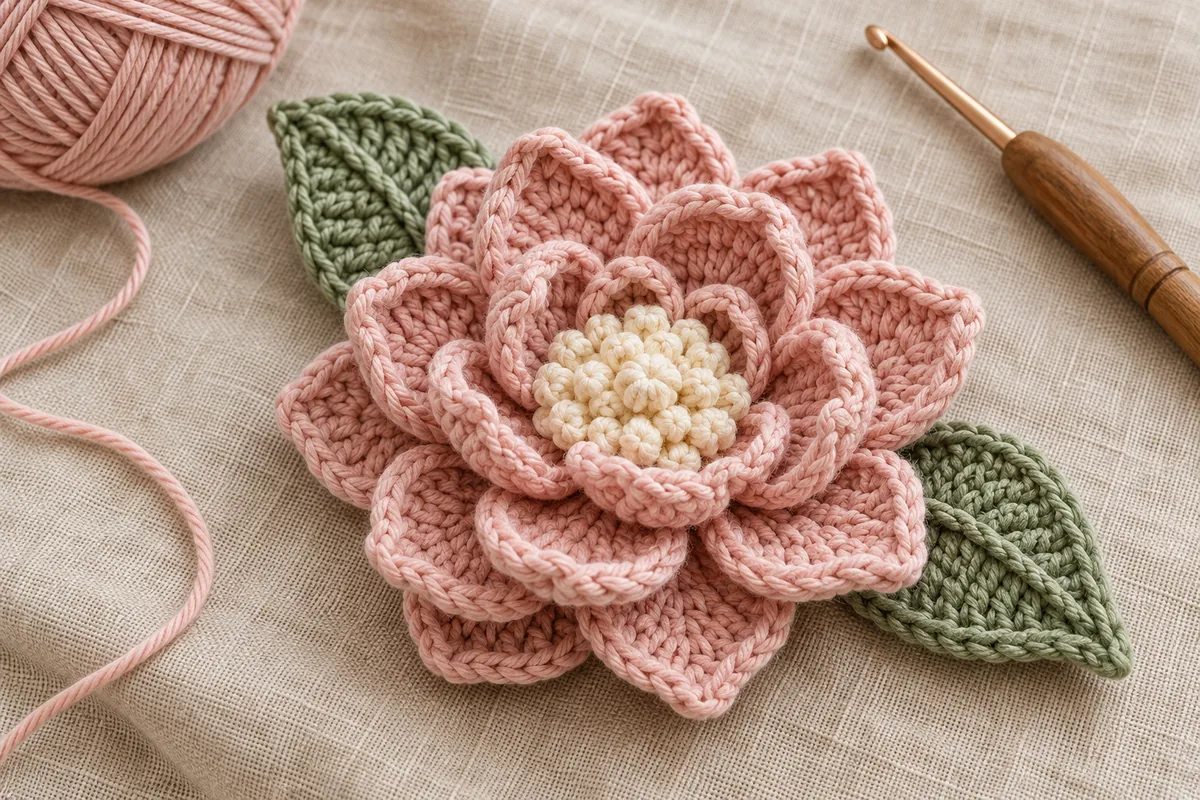
Raised stitches, curled petals, or multiple layers create depth. Use this style when the flower should be the main feature rather than a supporting detail.
How to Resize a Crochet Flower Pattern
Use the crochet flower size guide table as your starting point, then try the least disruptive change: a different yarn weight and matching hook before changing the stitch count. If the flower is still too small or large, adjust one construction element at a time.
- Change yarn and hook together. This preserves the original proportions most reliably.
- Add or remove a petal round. This changes both diameter and depth.
- Adjust petal height. Replace some single crochet stitches with half double or double crochet for longer petals.
- Change the number of petals carefully. Too many petals can cause ruffling; too few can leave gaps.
- Block and measure again. A flower may gain noticeable width after the petals are shaped.
Write down the yarn, hook, and finished diameter for every successful sample. These notes make it much easier to reproduce a matching set later.
Color and Proportion Tips
The crochet flower size guide helps you choose the scale; next, use contrast to make the flower readable from a distance. A dark center with lighter petals emphasizes the shape, while tonal colors create a soft, romantic look. If the flower includes leaves, repeat one leaf color elsewhere in the project so the arrangement feels connected.
For a cluster, combine one main flower with two or three smaller supporting blossoms. Keep some open space between motifs. An arrangement often looks more natural when the flowers vary slightly in size and face different directions.
Common Crochet Flower Sizing Problems
Why is my flower larger than the pattern measurement?
Your yarn may be thicker, your hook may be larger, or your tension may be more relaxed. Check the yarn category, make a small gauge sample, and compare the finished first round before completing every layer.
Why do the petals curl or ruffle?
Curling can come from tight tension or a hook that is too small. Ruffling usually means the round contains more stitches than the available space can hold. Check the stitch count before changing the pattern.
How can I keep several flowers the same size?
Use the same yarn, hook, and tension, then measure the first finished flower as a reference. Make all centers first, followed by the same petal round on every flower, to keep your rhythm consistent.
Should I block crochet flowers?
Block flat and lace flowers when you need an even outline. Dimensional roses may only need gentle shaping by hand. Always follow the yarn care instructions and avoid excessive heat on synthetic fibers.
Choose the Flower for the Project
The right flower is the one that looks balanced, stays secure, and suits the way the finished item will be used. Tiny flat blossoms add delicate detail, medium flowers create versatile focal points, and large layered flowers bring drama to décor. Use this crochet flower size guide as a starting point, then test one sample directly on your project before making a full set.
Save the size table for your next project and keep notes on every flower you make. Alongside this crochet flower size guide, a simple record of yarn, hook, diameter, and petal style will quickly become your own reliable crochet flower library.