Best Yarn for Crochet Bandanas: Easy Beginner Step-by-Step Guide
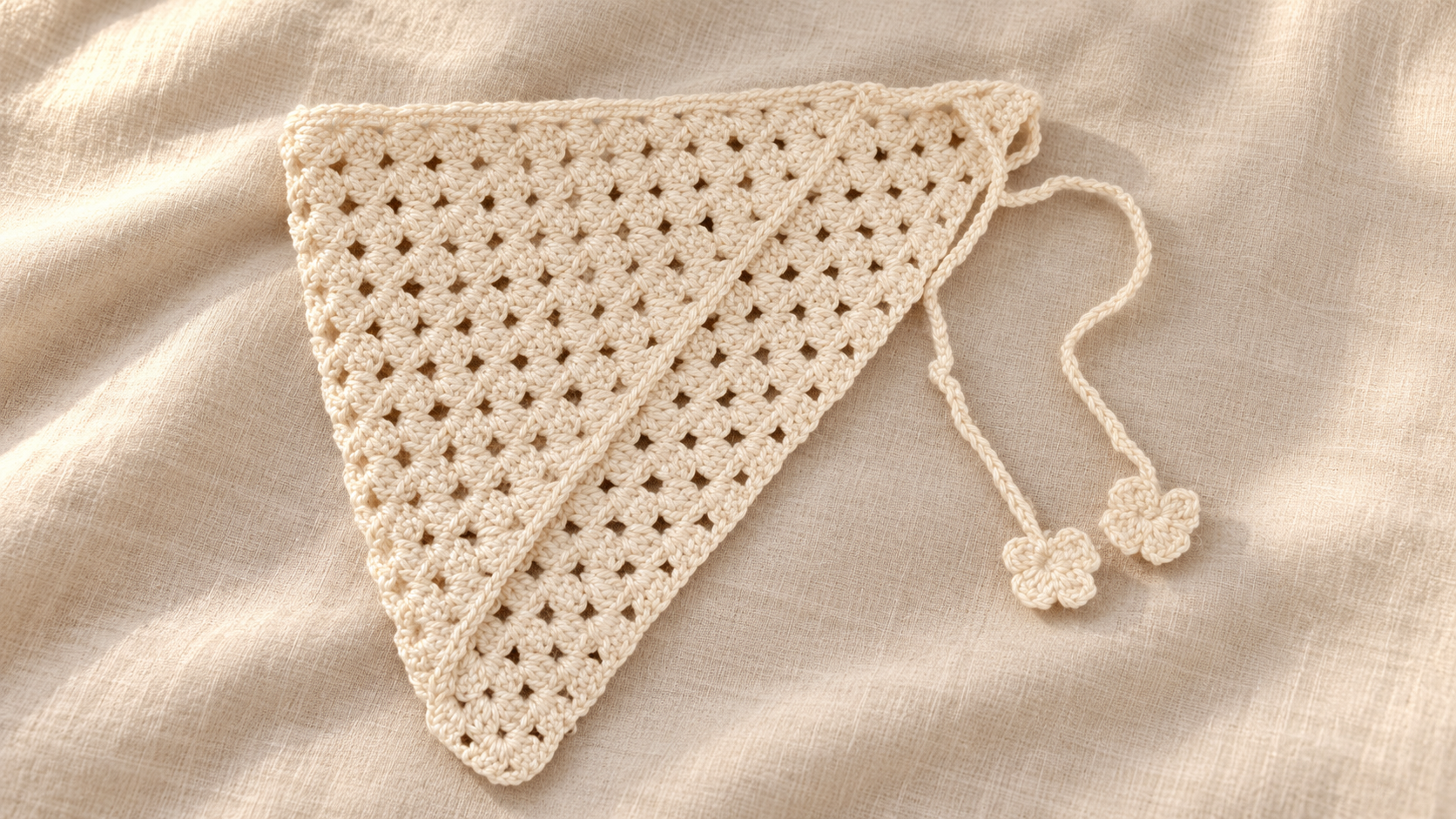
The best yarn for crochet bandanas should feel comfortable against the skin, hold a neat triangle, show the stitch pattern clearly, and stay secure when tied. Cotton is often the safest all-around choice, but acrylic, bamboo, and blended yarns can work beautifully when their drape and stretch match the style you want.
Best yarn for crochet bandanas: quick comparison
| Yarn | Best for | Main advantage | Watch for |
|---|---|---|---|
| 100% cotton | Summer bandanas and crisp lace | Breathable with clear stitch definition | Can feel firm or heavy in thick weights |
| Cotton blend | Everyday wear | Balanced comfort, shape, and softness | Fiber percentages change the behavior |
| Acrylic | Budget projects and cooler weather | Lightweight, colorful, and easy to find | Less breathable and sensitive to high heat |
| Bamboo or bamboo blend | Soft, flowing bandanas | Silky drape and a cool feel | May stretch or grow with wear |
Cotton: the reliable choice for a structured bandana
When comparing the best yarn for crochet bandanas, cotton stands out for clean edges and visible stitch definition. It is breathable, absorbs moisture, and usually holds a knot well. This makes it especially useful for warm-weather hair accessories and open lace designs.
- Choose mercerized cotton when you want a smooth surface, a slight sheen, and very crisp stitches.
- Choose soft matte cotton for a casual handmade look and a gentler feel against the forehead.
- Choose a cotton blend if pure cotton feels too firm or heavy.
Cotton has less natural bounce than wool and many acrylic yarns, so very tight tension can create a stiff fabric. If the swatch feels rigid, relax your tension or try a hook that is 0.5 mm larger.
Acrylic: affordable, light, and beginner-friendly
A smooth acrylic yarn is easy to find in many colors and is often more affordable than plant fibers. It can be a practical choice for practice projects, gifts, and bandanas meant for cooler days. Acrylic also has more bounce than cotton, which can make the stitches feel easier on the hands.
The tradeoff is breathability. Acrylic can feel warm when worn closely over the hair, and a very soft acrylic may stretch after repeated tying. Choose a smooth yarn with moderate twist rather than a fuzzy or loosely spun one. Never press acrylic directly with a hot iron; excessive heat can permanently flatten or damage the fibers.
Bamboo: soft drape for a flowing lace look
Bamboo-derived yarns feel smooth and cool, and they create an elegant drape. They suit bandanas designed to fall softly around the head instead of holding a firm shape. The sheen can make simple stitches look polished without adding complicated details.
That softness can also make the fabric grow. A loose bamboo bandana may become wider during wear, especially when the ties add weight. Make a swatch, wash it as you plan to wash the finished piece, and measure it again after drying. A bamboo-cotton blend is often easier to control than pure bamboo yarn.
Why cotton blends are often the best compromise
A cotton-acrylic blend can keep cotton’s stitch definition while adding softness and a little elasticity. A cotton-bamboo blend combines structure with smoother drape. Read the fiber percentages on the label: a yarn that is mostly cotton will behave differently from one that contains only a small amount of cotton.
Simple buying rule: choose cotton for structure, acrylic for affordability and bounce, bamboo for drape, or a blend when you want a balance of those qualities.
What yarn weight works best?
Fiber tells you how the yarn behaves; yarn weight tells you how thick the finished fabric will be. The Craft Yarn Council yarn weight system is a useful reference when a label uses a number instead of names such as sport or DK.
- Fingering or sport weight: light, delicate lace with a soft drape; it takes more rows and time.
- DK weight: a versatile choice for everyday bandanas, with enough body to hold the triangle shape.
- Light worsted or worsted: thicker, quicker, and more structured; better for cool weather than hot days.
For a first bandana, smooth DK cotton or a cotton blend is easy to see and comfortable to handle. Use the hook size in your pattern as a starting point, then make a small swatch before committing to the full triangle.
How to test yarn before starting
- Crochet a small sample using the pattern stitch.
- Check whether the chain spaces and clusters remain easy to see.
- Stretch the sample gently, then let go. Notice how quickly it returns to shape.
- Place it against your forehead or neck to test comfort.
- Wash and dry the sample according to the yarn label, then check its size again.
Match the yarn to the bandana style
| Finished look | Good starting yarn |
|---|---|
| Crisp granny clusters | DK cotton or cotton-acrylic blend |
| Fine vintage lace | Sport-weight mercerized cotton |
| Soft boho drape | Bamboo-cotton blend |
| Warm autumn accessory | Light worsted acrylic or a soft wool blend |
| Beginner practice piece | Smooth, light-colored DK yarn |
If your main concern is getting the triangle and ties to sit correctly, see our adjustable crochet bandana fit and finish guide.
Common questions
Is cotton or acrylic better for a crochet bandana?
Cotton is usually better for a breathable bandana with crisp stitch definition. Acrylic is useful when budget, color choice, and lightweight warmth matter more. A cotton-acrylic blend offers a practical balance.
Can I use bamboo yarn for a bandana?
Yes. Bamboo creates a cool, soft bandana with elegant drape. Swatch first because some bamboo yarns stretch and may make the finished bandana wider than expected.
How much yarn does a crochet bandana need?
The amount changes with yarn weight, stitch pattern, tie length, and finished size. Small lace bandanas may use well under one standard skein, while thicker or larger designs use more. Follow the yardage in your chosen pattern and keep extra yarn for swatching and adjustments.
What color yarn is easiest for beginners?
A smooth yarn in cream, beige, pale blue, or another light solid color makes chain spaces and stitch tops easy to identify. Save very dark, fuzzy, or highly variegated yarn for after you know the stitch repeat.
Ready for a complete project? Explore the Bloom-Tie Lace Crochet Bandana pattern pack with illustrated instructions, printable guides, and private video support.
The best yarn for crochet bandanas is the one that matches the season, the stitch pattern, and the way you want the fabric to sit. When in doubt, begin with smooth DK cotton or a cotton blend, make a swatch, and adjust the hook before starting the full project.