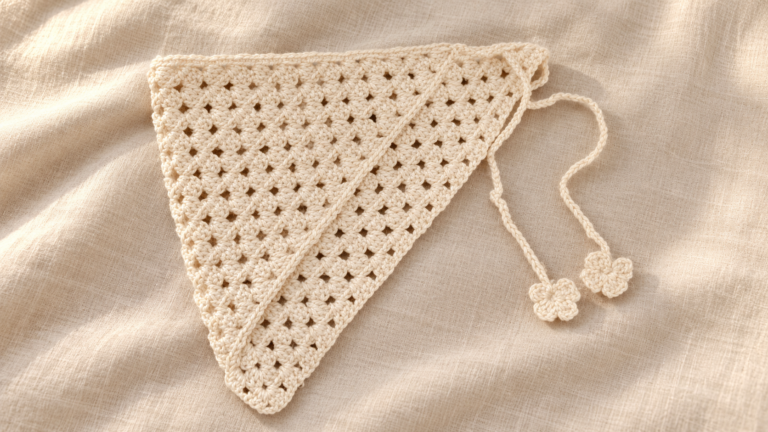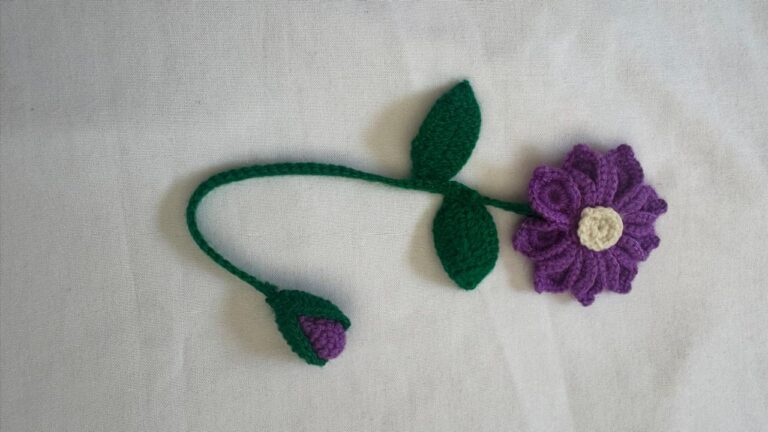
8 Beautiful Crochet Leaf Patterns, Styles & Project Ideas
Crochet leaf patterns are small, satisfying projects that can change the look of a flower, hair accessory, garland, bookmark, bag, or handmade gift. A leaf can be soft and rounded, long and pointed, deeply textured, or light and lacy. The best shape depends on the project, the yarn, and how much structure you want the finished piece to hold.
The crochet leaf patterns in this guide cover eight beautiful styles, explain how their shapes are created, and show where each one works best. You will also find practical advice for choosing yarn, adjusting size, blocking, attaching leaves, and building balanced botanical arrangements.
Crochet Leaf Patterns: Materials and Basic Stitches
Most small leaves use only a little yarn, which makes them ideal for using leftovers. Cotton gives crisp stitch definition and holds a clear outline. Acrylic feels softer and works well for blankets, garlands, and washable accessories. Mercerized cotton or crochet thread creates delicate leaves for jewelry, lace, and fine embellishment.
- Yarn: crochet thread, fingering, sport, or DK weight for small motifs
- Hook: choose the size recommended for the yarn, then go down slightly for a firmer leaf
- Useful stitches: chain (ch), slip stitch (sl st), single crochet (sc), half double crochet (hdc), double crochet (dc), and treble crochet (tr)
- Finishing tools: yarn needle, scissors, rustproof pins, and a blocking mat
This article uses US crochet terminology. If you are comparing patterns from different countries, remember that stitch names can change. The Craft Yarn Council crochet abbreviations are a useful reference, and our guide to reading crochet charts can help when a leaf is shown as a symbol diagram.
1. Simple Oval Crochet Leaf
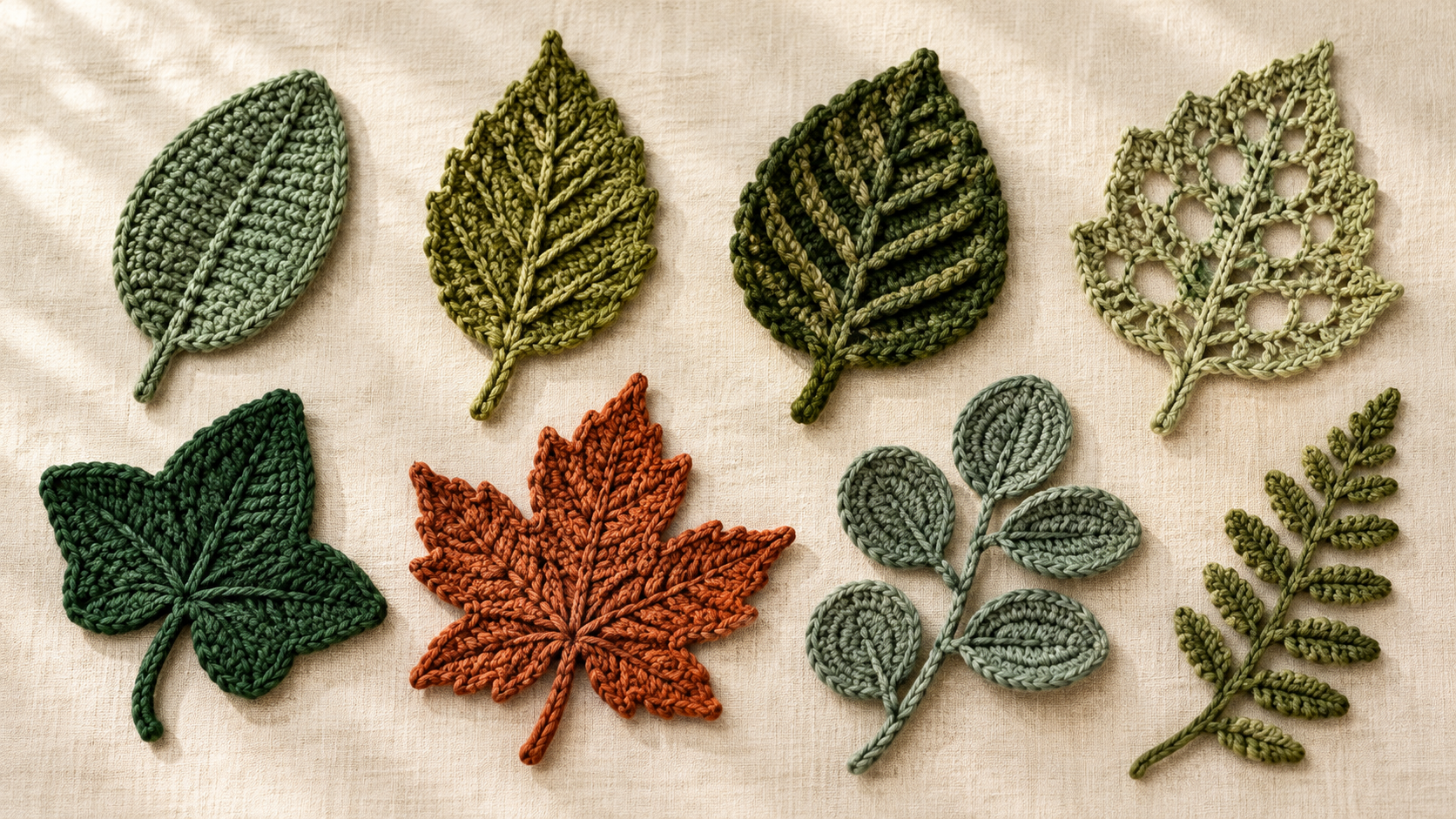
Among beginner crochet leaf patterns, the simple oval leaf is the easiest place to begin. It is usually worked around both sides of a foundation chain. Short stitches near each end and taller stitches through the center create a smooth, rounded outline. The same construction can produce a tiny flower leaf or a larger appliqué simply by changing the chain length.
Best for: daisies, small roses, baby accessories, gift tags, and beginner practice. Use cotton for a neat outline or soft acrylic when the leaf will be sewn onto a blanket.
2. Pointed Botanical Leaf
A pointed leaf has a stronger botanical look and is one of the most adaptable crochet leaf patterns. Its narrow tip is often formed with chains, slip stitches, or a picot, while gradual stitch-height changes shape the sides. A central line of slip stitches can suggest a vein and make the leaf lie flatter.
Best for: floral hair clips, bookmarks, brooches, corsages, and realistic flower stems. Pair it with a layered rose or sunflower when you want the flower to remain the main focal point.
3. Textured Veined Leaf
Raised texture gives crochet leaf patterns more presence. Front-loop, back-loop, or surface slip stitches can create a central vein and fine side veins. The technique is especially effective in a solid-color leaf because light and shadow reveal the texture.
Best for: autumn garlands, statement appliqués, home décor, and close-up photography. Choose a smooth yarn rather than a fuzzy one so the raised details remain visible.
4. Openwork Lace Leaf
Openwork crochet leaf patterns use chain spaces and taller stitches to create a light, airy fabric. It can look delicate even when made in a medium yarn. Blocking matters here: pin the outline gently and open the chain spaces without stretching the motif out of proportion.
Best for: lace hair accessories, wedding details, earrings, summer garlands, and decorative edging. A tonal cream, dusty rose, or muted sage palette gives this style a romantic finish.
5. Three-Lobed Ivy Leaf
The ivy-inspired shape is built from three connected points or lobes. Its silhouette is more decorative than a basic oval and adds movement to a vine. Work the lobes evenly for a tidy motif, or vary their size slightly for a more natural appearance.
Best for: wall hangings, trailing vines, woodland themes, wreaths, and cottage-style décor. Join several leaves to a crocheted chain to create an easy botanical garland.
6. Maple-Inspired Crochet Leaf
A maple-inspired leaf uses multiple points, increases, and decreases to create a recognizable seasonal outline. It requires more counting than a simple leaf, so stitch markers can help identify the center and the base of each point.
Best for: fall table décor, coasters, bunting, wreaths, and Thanksgiving projects. Rust, mustard, burgundy, olive, and warm brown make a strong autumn collection.
7. Rounded Eucalyptus-Style Leaf
Eucalyptus-style crochet leaf patterns are small, rounded, and especially effective when repeated along a stem. They can be worked separately and sewn in place, or attached directly to a crocheted cord. Small variations in size make the branch look more organic.
Best for: minimalist garlands, nursery décor, bouquets, gift wrapping, and modern botanical projects. Try two or three related green shades instead of using one color throughout.
8. Fern Leaf or Leaf Spray
Fern-inspired crochet leaf patterns combine many small leaflets along one central chain or stem. Repetition creates the shape, so consistent tension is more important than complicated stitches. The finished motif fills empty space beautifully without competing with a large flower.
Best for: bouquets, floral crowns, wall art, wreaths, and larger arrangements. Make the leaflets gradually smaller toward the tip to create a convincing tapered silhouette.
How to Change the Size of a Crochet Leaf
There are three simple ways to change leaf size. First, change the yarn weight and use a suitable hook. A fingering-weight leaf will be delicate, while the same construction in DK or worsted yarn will be larger and more substantial. The Craft Yarn Council’s standard yarn weight system is helpful when comparing substitutions.
Second, adjust the foundation chain. Adding chains lengthens many oval and pointed constructions, but the stitch sequence must still rise gradually toward the center and fall toward the opposite end. Third, adjust tension. A smaller hook produces a firmer, more compact motif; a larger hook gives a softer and more open fabric.
Color Combinations That Make Leaves Look Intentional
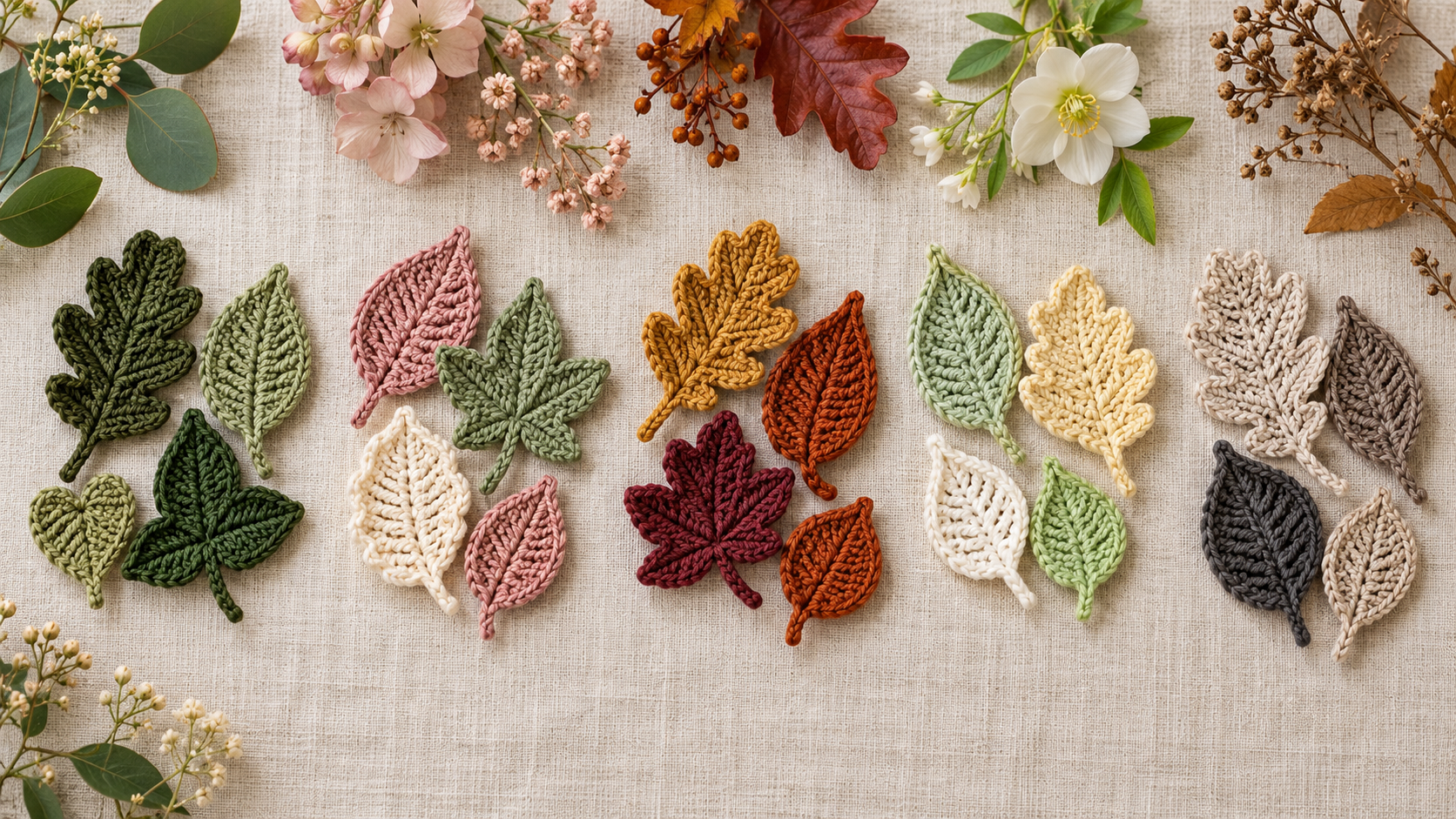
- Natural garden: sage, olive, moss, and forest green
- Soft romantic: eucalyptus, cream, dusty rose, and muted plum
- Autumn: mustard, rust, burgundy, copper, and warm brown
- Fresh spring: apple green, mint, pale yellow, and white
- Modern neutral: beige, oatmeal, taupe, and charcoal
When crochet leaf patterns support a colorful flower, choose one or two quieter greens. When leaves are the main design, mix values—from pale to dark—to create depth. Repeat at least one color elsewhere in the project so the motif feels connected rather than added at the last moment.
Finishing and Attaching Crochet Leaves
Weave in ends on the wrong side without pulling the edges inward. For cotton motifs, light wet blocking usually gives the cleanest outline. Acrylic may respond to gentle steam, but keep the heat source above the fabric and follow the yarn label because excessive heat can flatten or damage the fibers.
To attach crochet leaf patterns, use the matching yarn and sew through the center vein or around the outer edge, depending on the effect you want. Securing only the base allows the tip to lift for a three-dimensional look. Sewing around the full outline keeps the leaf flat and is better for children’s accessories or frequently washed items.
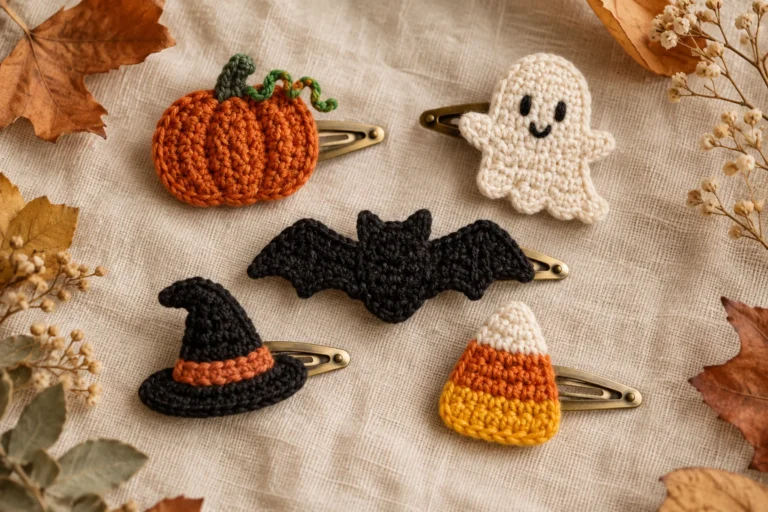
For hair accessories, secure every component carefully and check the back for loose yarn tails or sharp hardware. You can find more composition ideas in our crochet floral hair bow guide and seasonal examples in these crochet Halloween hair clip ideas.
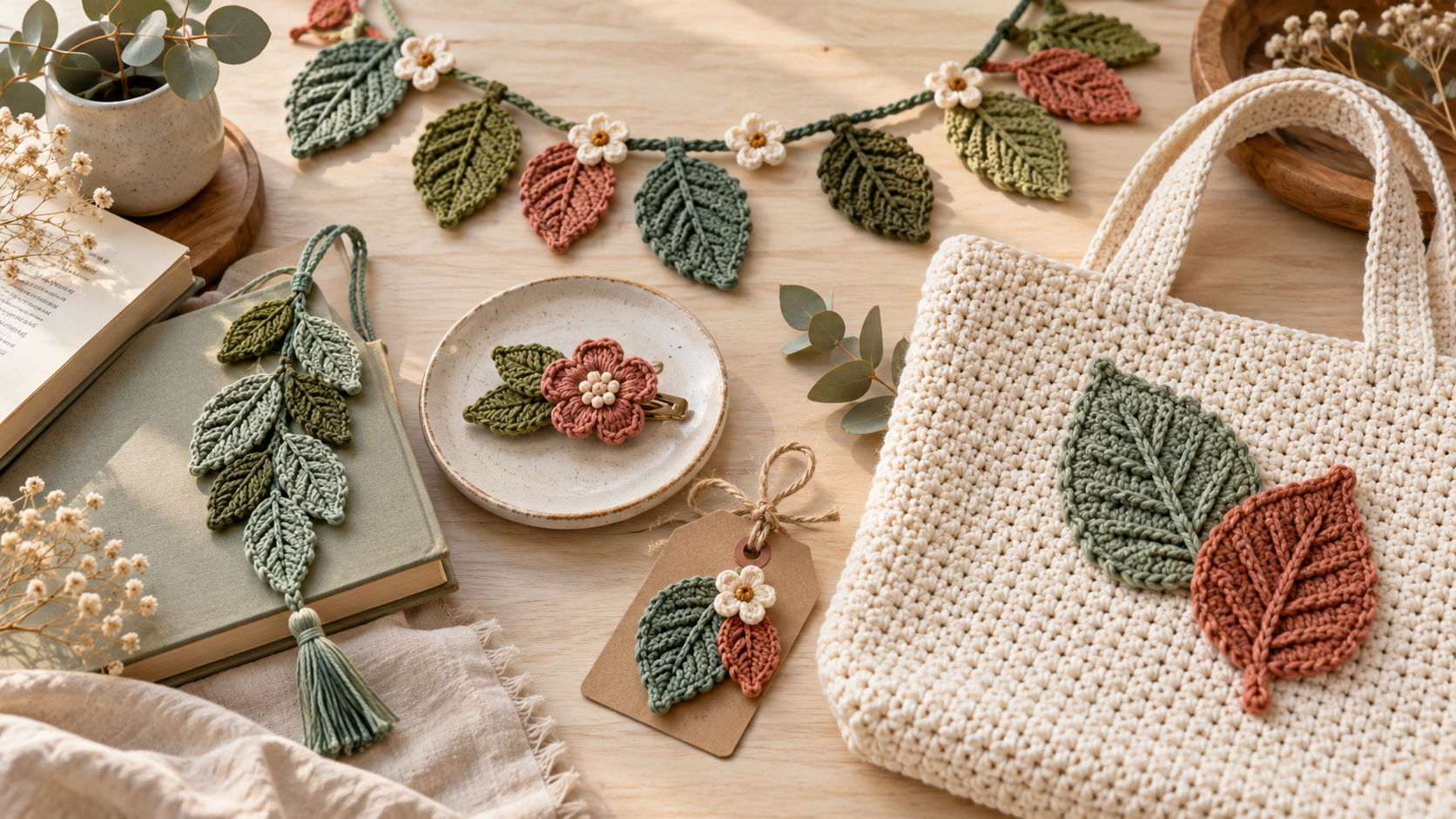
Project Ideas for Finished Crochet Leaf Patterns
- Sew two pointed leaves behind a crochet flower.
- Add a small oval leaf to a bookmark cord.
- Join ivy leaves to a chain for a trailing garland.
- Turn firm cotton leaves into gift tags or ornaments.
- Arrange autumn leaves around a wreath form.
- Use tiny lace leaves for earrings or bridal accessories.
- Create a eucalyptus branch for a modern wall hanging.
- Combine fern sprays with large flowers in a crochet bouquet.
If you want to compare the shaping advice with a tested project, Yarnspirations offers a free easy crochet leaf motif designed for cards and gift tags.
Common Crochet Leaf Problems
Even carefully made crochet leaf patterns can curl, lose their point, or vary slightly in size. These quick fixes solve the most common issues.
Why does my leaf curl?
Curling usually comes from tight tension, too many stitches around the foundation chain, or an undersized hook. Try relaxing your tension, checking the stitch count, and blocking the finished motif.
Why is the point not sharp?
A defined point needs a deliberate turning detail, such as a short chain, slip stitch, or picot. Blocking the tip with one pin can also improve the outline.
How do I keep several leaves consistent?
Use the same yarn, hook, stitch count, and tension. Measure the first finished leaf and keep it beside you as a reference while making the rest.
Choosing the Right Leaf Style
Choose a simple oval or pointed shape when the leaf supports a flower. Select textured or lobed leaves when the foliage deserves attention of its own. Lace leaves suit delicate accessories, while firm cotton motifs work well for garlands, tags, and décor. Start with one style, make it in two sizes, and test it beside the main project before committing to a full arrangement.
These eight crochet leaf patterns and styles offer enough variety for every season. Save your favorite shapes, experiment with color and scale, and use the finished motifs to give handmade projects a thoughtful botanical finish.